Emergency Tree Service After Storms in Huntsville, AL What To Do Before You Call
Evan
June 30, 2026
Storm damage has a way of making everything feel urgent.
One minute, the yard looks normal. Then the wind picks up, the rain comes sideways, and by the time it passes, there are limbs everywhere. Maybe a tree is blocking the driveway. Maybe a large branch is resting on the roof. Maybe a trunk has split down the middle, and you are standing there wondering if it is safe to even walk outside.
That first hour after a storm can feel overwhelming. But the smartest thing you can do is slow down, look for the real hazards, and avoid doing anything that could make the situation more dangerous.
This guide walks Huntsville homeowners through what to do first after storm related tree damage, what not to touch, when the situation becomes an emergency, and how Paul Bunyan Tree Service can help with emergency tree removal, storm cleanup, trimming, and stump grinding.
Paul Bunyan Tree Service provides tree services in Huntsville, including tree removal, trimming, stump grinding, storm damage cleanup, and 24 hour emergency tree service.
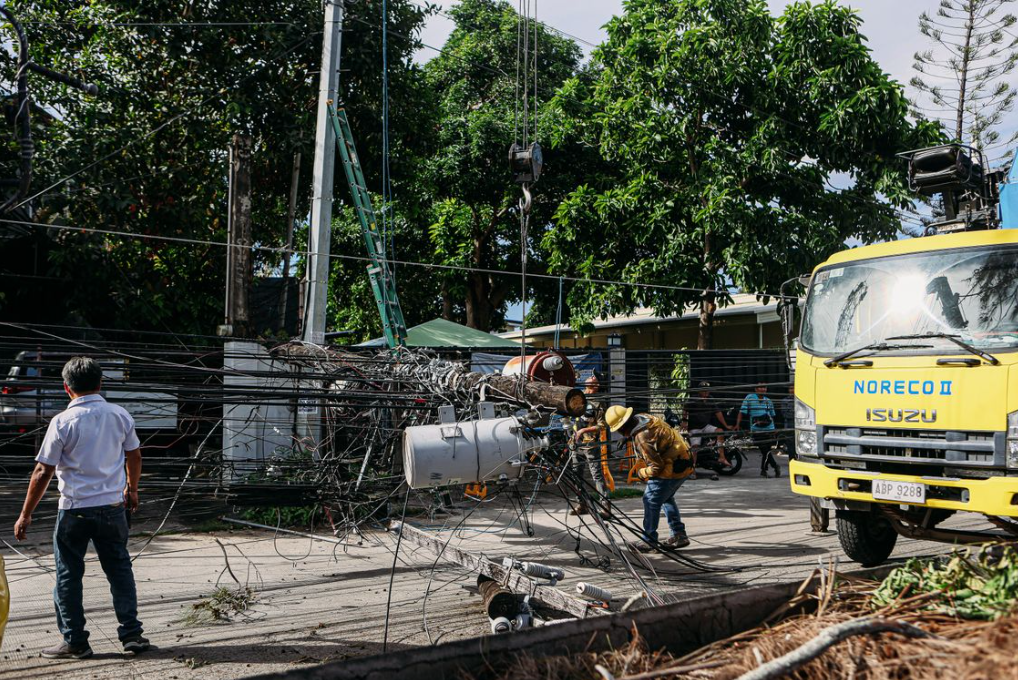
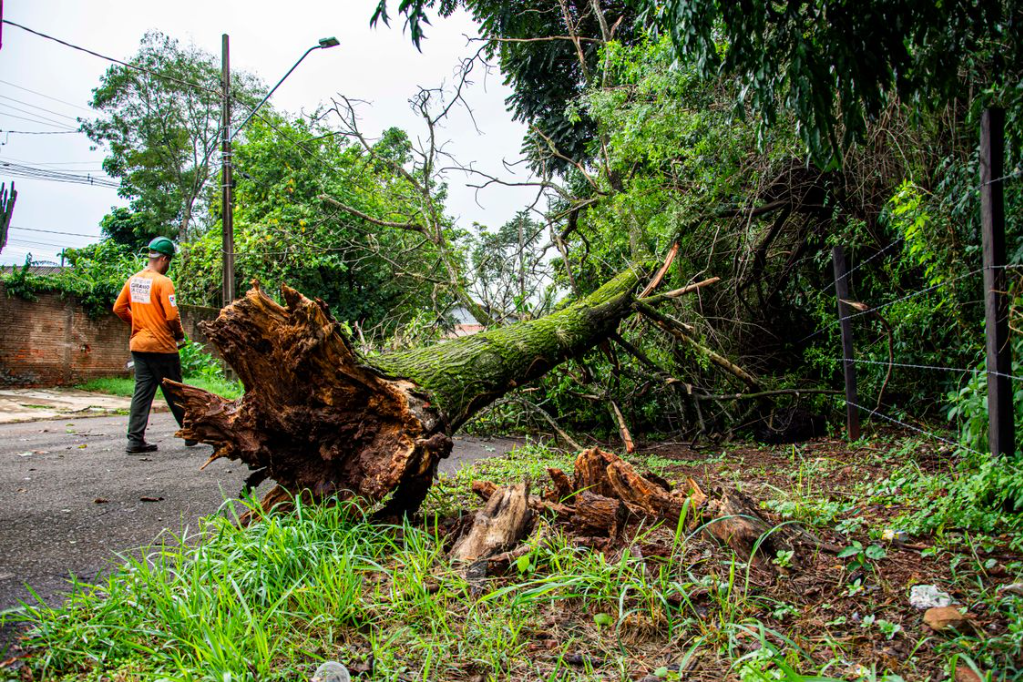
- Why emergency tree service matters in Huntsville
Huntsville is no stranger to severe weather.
The National Weather Service Huntsville office explains that severe weather in the Tennessee Valley can happen any time of year, but there are two distinct peaks, spring and fall. March, April, and May bring the greatest number of severe weather instances, and the area sees another peak in November.
That means tree emergencies are not random. They often happen in clusters, especially after strong wind, heavy rain, lightning, and saturated soil.
When storms hit, weak trees, dead limbs, cracked trunks, and overgrown canopies are usually the first to fail.
- First thing first, check for power lines
Before you walk into the yard, look up and around.
If a tree or branch is touching a power line, treat it like a live electrical hazard. Do not touch the tree. Do not touch the branch. Do not try to pull anything away. Do not walk under it.
Alabama Power warns that downed power lines may still be energized, and people should assume a downed line is energized and stay away.
This is especially important after storms because wet trees, wet ground, fences, and metal objects can all make the situation more dangerous.
If you see a downed line, sparking, smoke, or a tree tangled into a line, call emergency help or the utility first.
- What counts as a tree emergency
Not every branch in the yard is an emergency. But some situations need attention right away.
You should treat it as an emergency if:
- A tree fell on the house
- A tree or large limb is on the roof
- A tree is blocking the driveway or street access
- A tree is leaning toward the home after the storm
- A large limb is hanging and could fall
- A trunk split or cracked during the storm
- The roots lifted or the soil around the tree moved
- A tree is touching or near power lines
- A tree is blocking a walkway or entrance
- A tree damaged a fence, garage, shed, or vehicle
If something can fall, shift, or block access, it is worth calling for help sooner rather than later.
- What you should do before calling a tree service
1. Keep people away from the damaged area
This sounds simple, but it matters. After storms, people naturally want to inspect everything. Kids wander out. Neighbors come over. Dogs run straight toward the mess.
Keep everyone away from the damaged tree until you know it is stable.
A cracked limb can fall later. A tree resting on another tree can shift. A branch under tension can spring loose when moved.
2. Take photos from a safe distance
If the damage involves a roof, fence, vehicle, shed, or driveway, take photos before cleanup begins.
Photos can help with insurance questions and make it easier to explain the situation when you call.
Take photos of:
The full tree
The damaged area
The trunk or split
Anything the tree hit
Access points for the crew
Nearby power lines or structures
Do not climb, step under hanging limbs, or move closer than feels safe just to get a better picture.
3. Describe the hazard clearly
When you call, explain what happened in simple terms.
Helpful details include:
Is the tree fully down or still standing
Is it touching the house
Is it touching a power line
Is it blocking access
Is the trunk split
Are large limbs hanging
Is the ground around the roots lifted
Is there room for equipment to access the area
You do not need to know the tree species. You just need to explain what you see.
4. Avoid cutting anything under pressure
Storm damaged limbs can be dangerous because they may be bent, pinned, twisted, or carrying weight in a way that is not obvious.
The CDC warns that cutting bent trees or branches can be extremely dangerous because they can spring back with enough force to cause serious injury or death.
If a limb is trapped under another limb, hanging from the tree, leaning on the roof, or caught in a fence, do not cut it yourself.
- What not to do after a storm
Please do not do these things:
Do not climb onto the roof to remove limbs
Do not stand under hanging branches
Do not cut branches near power lines
Do not pull a fallen tree with a truck
Do not use a ladder against a damaged tree
Do not let kids play around storm debris
Do not drag limbs into the street without checking local rules
Do not assume a leaning tree is safe because it has not fallen yet
A lot of storm injuries happen during cleanup, not during the storm itself.
The CDC notes that chain saw injuries often happen after disasters when people are removing fallen or partially fallen trees and branches.
That is why emergency tree work is not just about speed. It is about safe removal in the right order.
- How emergency tree service works
Every emergency job is different, but the process usually looks something like this.
Step 1 Site safety check
The crew checks for immediate hazards, including power lines, unstable limbs, roof contact, cracked trunks, and unsafe footing.
Step 2 Decide what must be removed first
The most dangerous part of the tree is handled first. That might be a hanging limb, a split trunk, or the section pressing against a structure.
Step 3 Controlled cutting and removal
A professional crew does not just start cutting randomly. They work in sections, control the weight, and remove pieces in a way that protects the property.
Step 4 Debris cleanup
Once the hazard is removed, limbs, logs, and branches are cleaned up based on the job plan.
Step 5 Stump grinding if needed
If the tree comes down completely, stump grinding can finish the job so the yard is easier to repair and use again.
- What about storm debris pickup in Huntsville
If you are handling some of the debris yourself, local cleanup rules matter.
The City of Huntsville states that after storm events, homeowners are still required to cut debris into lengths no larger than five feet for pickup. The City also says that if a homeowner hires a contractor, the contractor is responsible for complete removal of the debris generated by the storm event.
That is important because once you hire a tree company, cleanup should be part of the conversation.
Before work begins, ask what happens to the debris, logs, chips, and stump.
- Should you call insurance first or the tree service first
It depends on the situation.
If there is active danger, call emergency help or a tree service first so the hazard can be secured. If the tree is on a roof, blocking access, or creating a safety risk, waiting too long can make the damage worse.
If the situation is stable and there is property damage, take photos and contact your insurance company for guidance.
A good practical order is:
Safety first
Photos second
Tree service for hazards
Insurance call for covered damage
Cleanup and repair planning
Do not delay if the tree is still dangerous.
- Why trees fail during storms
Storms do not always knock down the strongest looking trees. They often expose weaknesses that were already there.
Common reasons trees fail include:
Dead limbs
Heavy canopy growth
Weak branch unions
Root damage
Saturated soil
Decay inside the trunk
Leaning toward open space or structures
Old storm damage that was never corrected
This is why regular trimming and inspections matter. A tree that looks fine from the street may have one large dead limb or weak attachment point that becomes a problem in strong wind.
- How to reduce emergency calls before the next storm
You cannot prevent every storm problem, but you can reduce obvious risks.
Before spring and fall storm seasons, look for:
Dead limbs over the house
Branches touching the roof
Trees leaning toward structures
Cracks in trunks or large limbs
Mushrooms or decay near the base
Heavy canopy growth
Large limbs over parking areas
Trees too close to power lines
If something already makes you nervous on a calm day, it will not feel better during a storm.
Paul Bunyan Tree Service can help with trimming, hazardous tree removal, and storm preparation before those busy weather windows arrive.
- Why call Paul Bunyan Tree Service
When a tree emergency happens, homeowners want three things.
Fast response
Safe work
A clean job when it is done
Paul Bunyan Tree Service serves Huntsville with tree removal, trimming, stump grinding, storm damage cleanup, and emergency tree service. The company highlights more than 32 years of experience, free estimates, owner involvement on every job, no payment until work is complete, and 24 hour emergency service.
That matters when you are dealing with a tree that is too close to your home, blocking your driveway, or creating a safety concern after a storm.
- FAQ Emergency Tree Service in Huntsville
What should I do first if a tree falls after a storm
Check for power lines first. Keep everyone away from the damaged area. Take photos from a safe distance. Then call emergency help, the utility, or a tree service depending on the danger.
Is a hanging limb an emergency
It can be, especially if it hangs over a roof, driveway, walkway, vehicle, or play area. Hanging limbs can fall without much warning.
Can I cut up a fallen tree myself
Only if it is small, fully on the ground, away from power lines, and you know how to use the equipment safely. The CDC warns that chain saw injuries are common after disasters and that bent branches can spring back dangerously.
Will the City pick up storm limbs in Huntsville
The City of Huntsville says homeowners must cut debris into lengths no larger than five feet for pickup. It also says if a contractor is hired, that contractor is responsible for complete removal of debris generated by the storm event.
When should I call Paul Bunyan Tree Service
Call when a tree or limb is on your home, blocking access, leaning after a storm, cracked, hanging, or too risky to clean up yourself.
- Call to action
If a storm left your yard with fallen limbs, a leaning tree, or a dangerous mess you do not want to touch, do not guess your way through it.
Paul Bunyan Tree Service provides emergency tree service, storm damage cleanup, tree removal, trimming, and stump grinding for Huntsville homeowners.
Request a free estimate and get the hazard handled safely before it becomes a bigger problem.
Request Free Estimate
Paul Bunyan Tree Service offers a proven track record of excellence, and our 32 years of experience in the industry speak volumes about our dedication and expertise.
Phone
(256) 656-6236
Serving Area
Huntsville, AL